


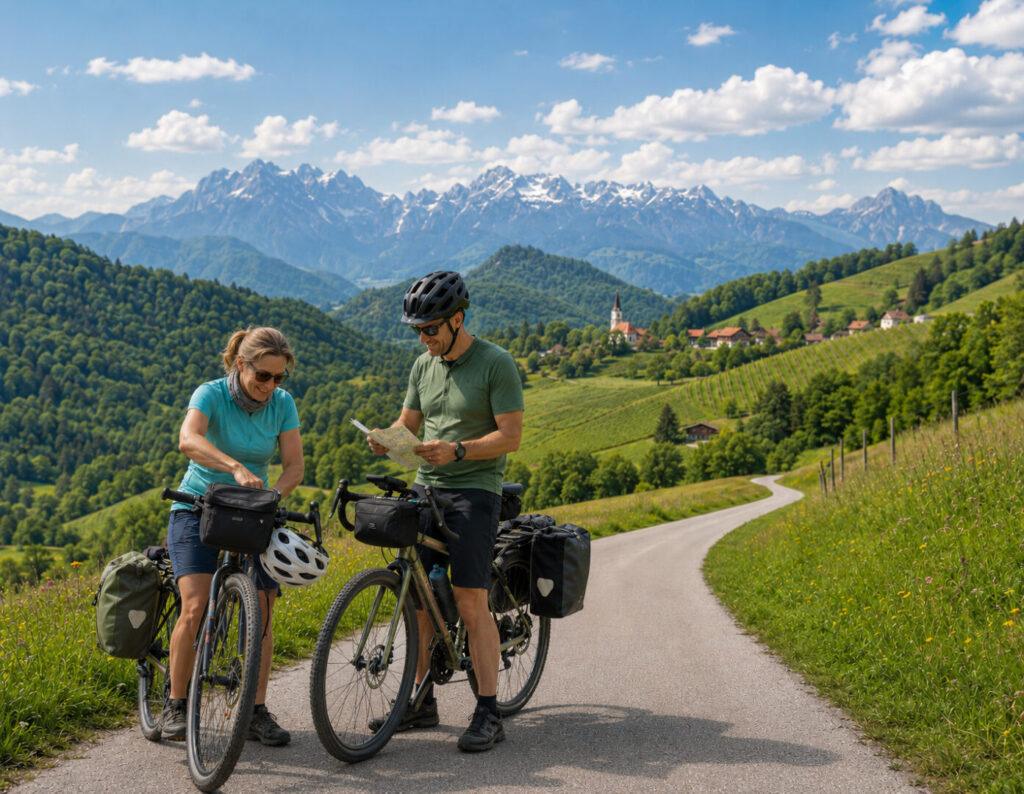
Preparing for a Cycling Holiday – 10 Tips for a Trouble-Free Ride
Cycling holiday preparation — and why pumping the tires is not a complete strategy
A cycling holiday is one of those things that always looks wonderfully effortless in photos. The sun is shining, the road is empty, the cyclist is smiling, and somewhere in the background there is probably a vineyard, a lake, or a suspiciously well-placed mountain.
Reality can be just as beautiful, of course. But it may also include looking for your phone charger at 5:30 in the morning, discovering that your favorite cycling shorts are still at home, or realizing that “a short climb” can sometimes mean “please reconsider your life choices”.
The good news? Preparing for a cycling holiday is not rocket science. The bad news? “I’ll manage somehow” is not really a plan.
Here are ten simple tips to make your next cycling adventure smoother, lighter, and much more enjoyable.
1. Start with yourself, not the bike
Many cyclists begin by buying a new jersey, new sunglasses, a new handlebar bag, and perhaps a very serious-looking GPS device. Then, after 30 kilometers, they start searching for the nearest café and an electrical socket.
Before a multi-day cycling holiday, try to do a few longer rides in the weeks before departure. You do not need to train for the Tour de France. You just need to remind your body that it will spend several days in a row sitting on a saddle it usually only meets on Sundays.
A few back-to-back rides are even better. One comfortable day on the bike is nice. Three days in a row are where your body begins to ask questions.
2. Do one ride with the exact equipment you plan to use
This is where many small disasters can be avoided.
Ride once with the same shorts, shoes, gloves, bags, bottles, phone holder, rain jacket and navigation setup you intend to take on holiday. Not for ten minutes around the block, but for a proper ride.
That is when you discover important things. The new saddlebag touches your leg every pedal stroke. Your rain jacket is waterproof, but also turns you into a portable greenhouse. Your phone mount slowly rotates towards the ground. Your “very comfortable” shorts may start telling a different story after two hours.
Better to learn this at home than halfway up a hill in Slovenia.
3. Let the bike have its medical check-up
There is an old cycling rule: if something can break, it will usually break at the most remote point of the route, preferably in the rain.
Before you leave, check the basics: chain wear, tyre condition, brake pads, gear shifting, bolts and quick releases, lights and charging cables, bottle cages and luggage racks.
If you are not completely sure what you are looking at, take the bike to a service. A quick check-up is usually cheaper than a taxi from the middle of nowhere, especially if the middle of nowhere has no taxi.
On a self-guided cycling tour in Slovenia, the route, hotels and luggage logistics may be arranged for you — but your own bike still deserves a little attention before the start.
4. Do not pack as if you are moving house
Most first-time cycling travellers pack far too much. After a few days, they realize that half of the luggage consists of things they have not used, will not use, and now slightly resent.
The basic rule is simple: if you are not sure you need it, you probably do not.
There are exceptions, of course. Always take the boring-but-important things: a spare inner tube, basic tools, pump or CO₂ inflator, chargers, power bank, personal documents, bank card and some cash, medication if needed, and lightweight rain protection.
Without these, stories become “interesting”. Interesting is fine in the pub afterwards. It is less charming while standing beside the road with a flat tyre and a phone battery at 3%.
5. Pack in layers, not in wishful thinking
Weather does not care about your holiday mood. It also does not care that the forecast
looked perfect three days ago.
For cycling, layers are your best friend. A light windproof or rain jacket, arm warmers, a breathable base layer and something warmer for evenings can save the day. Especially in countries like Slovenia, where you can cycle from alpine valleys to wine hills and the Adriatic coast in a single trip.
Before you travel, check the official Slovenian weather forecast. Then pack one sensible extra layer anyway. Weather forecasts are useful. Weather itself has a sense of humour.
6. Food is fuel, not a prize
On a cycling holiday, eat before you are hungry and drink before you are thirsty. If you wait until your body sends an official complaint, you are already late.
Good cycling snacks do not need to be complicated. Bananas, energy bars, sandwiches, nuts, apples, biscuits, local pastries or that mysterious bakery item you cannot pronounce but will remember for years can all save the day.
One of the great advantages of a cycling holiday is that food becomes part of the experience. A coffee stop, a slice of cake, a village lunch or a glass of something local at the end of the day are not interruptions. They are part of the route.
7. Navigation is brilliant — until the battery says goodbye
GPS devices and cycling apps are wonderful. Until they run out of battery, lose signal, or decide that a forest track last used by goats is the perfect shortcut.
Before you start, look at the route in advance. Not because you need to memorise every turn, but because it helps to know what kind of day is waiting for you. Is there a long climb? A remote section? A town where you can stop for lunch? A ferry? A border crossing? A suspicious gap between cafés?
For route planning and backup navigation, Komoot is a useful tool. On our tours, you will usually receive prepared routes and travel information, but it still helps to understand the day before you start pedalling.
The best navigation system is GPS plus a little common sense. And a charged power bank. Mostly the power bank.
8. Respect the saddle
This may not sound poetic, but it is important.
A cycling holiday is not only about legs and lungs. It is also about the quiet relationship between you, your shorts and your saddle. If that relationship fails, the landscape can be magnificent and you will still be thinking only about the next opportunity to stand up.
Do not start a multi-day trip with brand-new shorts or an untested saddle. Use equipment you know. Bring comfortable cycling shorts. Consider chamois cream if you are prone to irritation. And remember: comfort beats fashion every single day on tour.
Nobody ever ruined a cycling holiday by being too comfortable.
9. Choose the right kind of cycling holiday
Not every cycling holiday is the same. Some riders want quiet roads, luggage transfer and charming hotels. Others want alpine climbs, gravel tracks, mountain-bike trails or a short weekend escape.
Be honest with yourself. Do you want a challenge, or do you want relaxed days with time for coffee, photos and long lunches? Do you want to ride every kilometre, or would you prefer an e-bike option? Do you enjoy planning everything yourself, or would you rather have the logistics arranged?
If you like freedom but not chaos, a self-guided cycling tour is a very comfortable middle ground. You cycle independently, but the route, accommodation, luggage transfers and local support are already taken care of.
For a classic first Slovenia experience, tours such as the Emerald Tour from Ljubljana to Piran or the Best of Slovenia Cycling Tour are good examples of how varied a cycling holiday here can be.
10. Remember: it is a holiday, not an exam
This may be the most important tip.
A cycling holiday is not a race. You do not need to prove anything to anyone. Nobody will check your average speed at dinner. Nobody will refuse you dessert because you skipped a viewpoint. And no one has ever looked back on a great holiday and said, “I wish I had spent less time enjoying the scenery.”
Stop often. Take photos. Try local food. Talk to people. Sit by the river. Visit the village church, the wine cellar, the castle, the bakery or whatever catches your eye.
Kilometres fade. Good stories stay.
So charge your devices, check your bike, pack sensibly and start riding. The best adventures usually begin just after the next bend in the road.
And if you would like the route planning, luggage transfers and local support arranged for you, have a look at our cycling tours in Slovenia or check our cycling tour FAQ before you start.
Frequently Asked Questions About Preparing for a Cycling Holiday
What should I pack for a cycling holiday?
For a cycling holiday, pack basic tools, a spare inner tube, pump, chargers, power bank, personal documents, money, suitable cycling clothing and light rain protection. Try to pack only what you will really use.
How should I prepare my bike before a cycling tour?
Before a cycling tour, check the tyres, chain, brakes, gears, bolts, quick releases and any luggage racks or bags. If you are unsure, have the bike checked by a professional mechanic before departure.
How fit do I need to be for a cycling holiday?
You do not need to be an athlete for most recreational cycling holidays, but it helps to do several longer rides before departure. For multi-day tours, try riding on consecutive days so your body gets used to repeated daily cycling.
Is GPS enough for navigation on a cycling holiday?
GPS is very useful, but it is wise to check the route in advance and carry a charged power bank. A little route knowledge helps you avoid surprises such as long climbs, remote sections or unexpected detours.